Photo from Pexels
Originally Posted On: https://flexcontainer.com/how-stackable-containers-simplify-returns-management-in-reverse-logistics/
Before online shopping, consumers returned unwanted or damaged merchandise to brick-and-mortar stores. Return volumes were manageable and had minimal impact on financial statements. Today, returns are part of a consumer’s buying strategy. For example, almost 66% of shoppers bracket their purchases by buying apparel in three sizes with plans to return at least two. Around 69% of shoppers use return policies as a wardrobing practice by purchasing an item, wearing it once, and returning it. These shopping behaviors burden retailers by ballooning the number of products employees need to inspect, refurbish, recycle, or repackage. A return costs a retailer about 30% of the item’s original price. By enhancing the process of reverse logistics using stackable bins, retailers can defray some of the cost and labor burden imposed by returned goods.
Reverse logistics is the process of managing returns. In 2024, returns are expected to increase from 15% of all sales to 17%, costing retailers $890 billion in handling returned goods. That number does not include environmental impact costs. In 2023, 8.4 billion pounds of returned items ended up in landfills.
How Does Reverse Logistics Work?
Reverse logistics aims to recover value, retain customers, and reduce environmental impact. As the rate of returns grows from 10% of in-store purchases to at least 30% of online sales, improving the efficiency of these processes has become as important as boosting sales. Incorporating reusable, stackable bins into any reverse logistics process can provide many operational efficiencies.
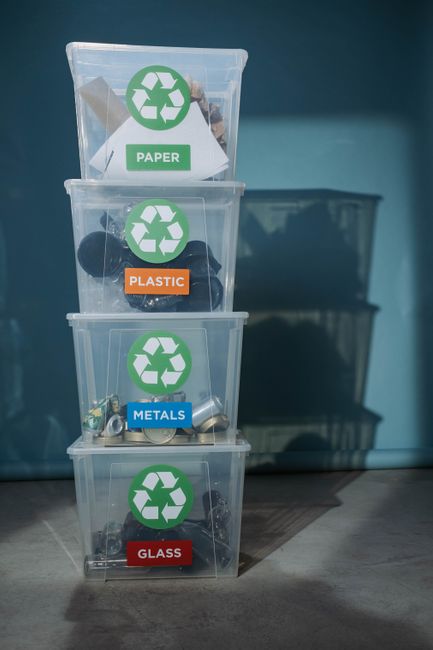
For example, when a business receives returned items, staff must inspect them to determine whether they should be restocked, resold, repaired, or recycled. Stackable bins can be placed near these inspectors, who can use them to sort returns based on their condition. Using color-coded bins would allow inspectors to quickly separate items into containers everyone will recognize as they move through a facility.
Why Use Stackable Bins?
Stackable bins are perfect for sorting and organizing smaller items. When made with corrugated plastic, they are highly reusable, reducing environmental waste. Flexcon’s stackable containers are durable, with a lifespan of between five and ten years, ensuring a strong return on investment. Reusable, stackable bins also come in uniform sizes so reverse logistics can better retain product value, reduce waste, and improve inefficiencies.
Maximize Space
With warehouse space at a premium, optimizing every square foot increases ROI. Instead of being restricted to horizontal rows stretched across a warehouse floor, stackable bins allow companies to take advantage of vertical space. This reduces the floor plan needed and the associated costs while improving the sorting and storage of returned packages.
Streamline Processing
Imagine the chaos in a poorly planned receiving area. Package sizes can range from bags holding a tube of chapstick up to bubble-wrapped carpet rolls. Someone must acknowledge receipt and organize the mixture of differently shaped products. By using stackable conveyor totes, receiving staff can toss packages into containers and forward them immediately to the inspectors. Consolidating items into universally sized containers reduces the chances of losing an item and further expedites the movement of packages from receiving to sorting.
Protect Returns
Placing items in corrugated plastic containers protects them from damage caused by handling. Whether automated systems or manual handling are used, bins add a layer of protection to minimize damage. Businesses could use a specific container size or color to identify products that require special handling.
Simplify Logistics
Consolidating returned items into stackable bins reduces the trips employees make as they move items throughout a warehouse. Without bins, employees may have to make multiple trips or attempt to balance various items in a single trip. Either scenario takes more time, increases the potential for product damage and worker injury, and adds to the physical burden on warehouse staff.
Support Sustainability
Bins made from recycled materials contribute to corporate sustainability goals. Bins with an extended usable life reduce the amount of waste that hits landfills every year. Flexcon’s stackable bins are made from recyclable plastic, making them practical components of a circular economy where materials are repurposed to reduce waste.
Reduce Costs
With their extended lifespans, reusable containers reduce labor costs associated with ordering and stocking bins. Ordering replacement containers once every five or more years instead of yearly frees employees to perform more valuable tasks. Bins also minimize breakage and improve operational efficiency. Improvements in the return management process can offset the growing costs of returns.
What Are the Obstacles to Implementation?
Upfront costs are usually the primary barrier for companies implementing stackable bins. Reusable containers cost more than cardboard equivalents, but last years instead of weeks. Because moisture damages cardboard, warehouses and storage facilities must keep humidity low and avoid contact with water for maximum usage. Corrugated plastic bins do not require this level of environmental control.
Procedures may change depending on how stackable bins are integrated into existing systems. New processes require employee training. A change in operations may add to initial costs, but these changes become standard practice once established.
Reverse Logistics
Return management is more than just a policy statement. It has become a crucial element of the customer experience. Yet, the costs associated with return processing can reduce profitability. Optimizing reverse logistics processes has become critical for lowering expenses and improving profit margins.
Flexcon’s reusable, stackable bins simplify operations, maximize storage space, and improve operational efficiencies. Contact Flexcon to discuss how stackable bins can help protect the value of returned products, increase customer satisfaction, and better support sustainability goals.
Sources:
https://www.nbcnews.com/news/us-news/retail-returns-890-billion-problem-rcna183359
https://www.forbes.com/sites/shelleykohan/2024/12/08/retail-returns-surge-to-890b-how-retailers-are-adapting-in-2024/